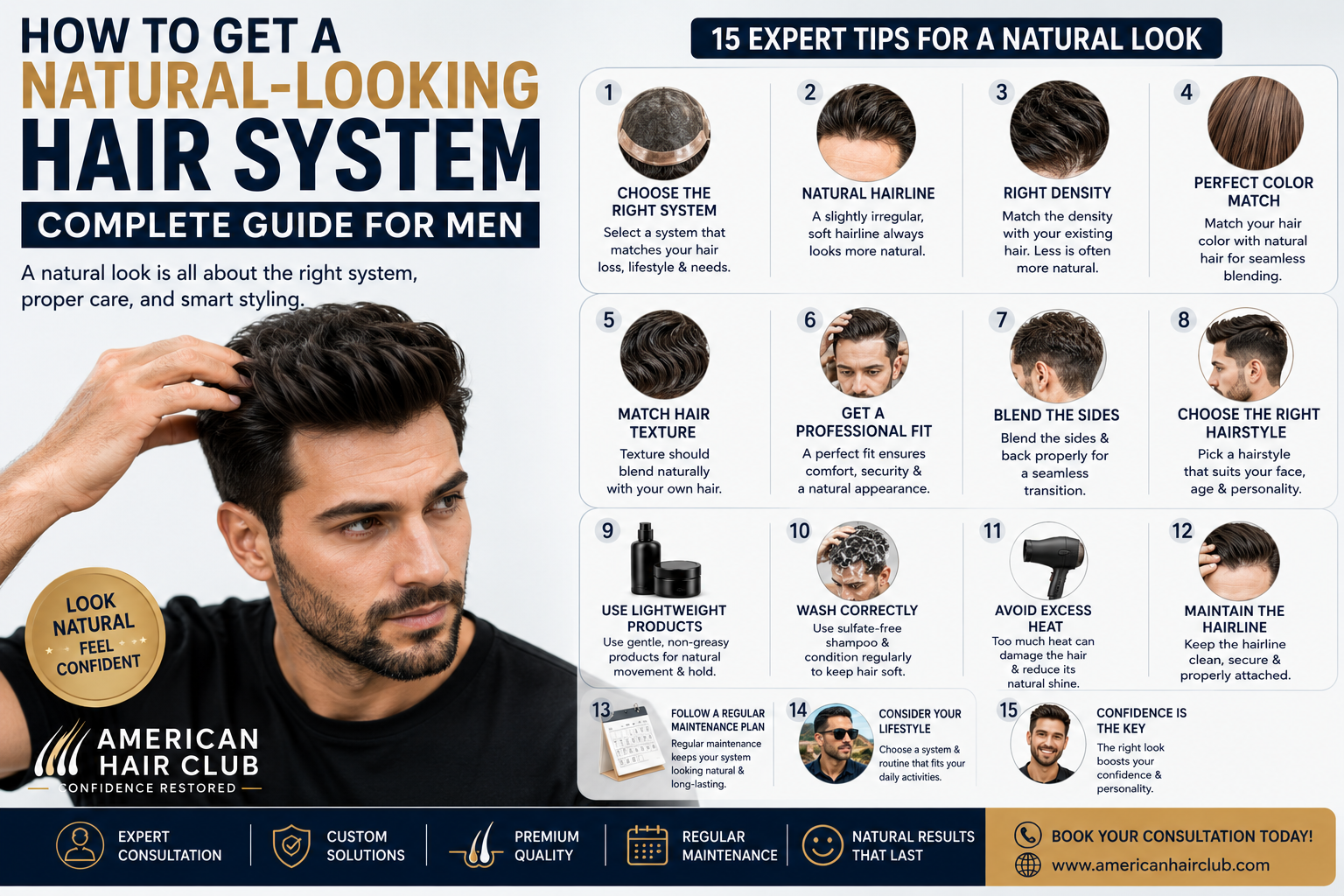
How to Get a Natural-Looking Hair System: Complete Guide for Men
Hair loss can affect more than your appearance. It can influence confidence, personal style, and the way you feel in everyday situations. For men looking for a non-surgical solution, modern hair systems offer a practical way to restore the appearance of fuller hair without undergoing a surgical procedure.
But choosing a hair system is only the beginning.
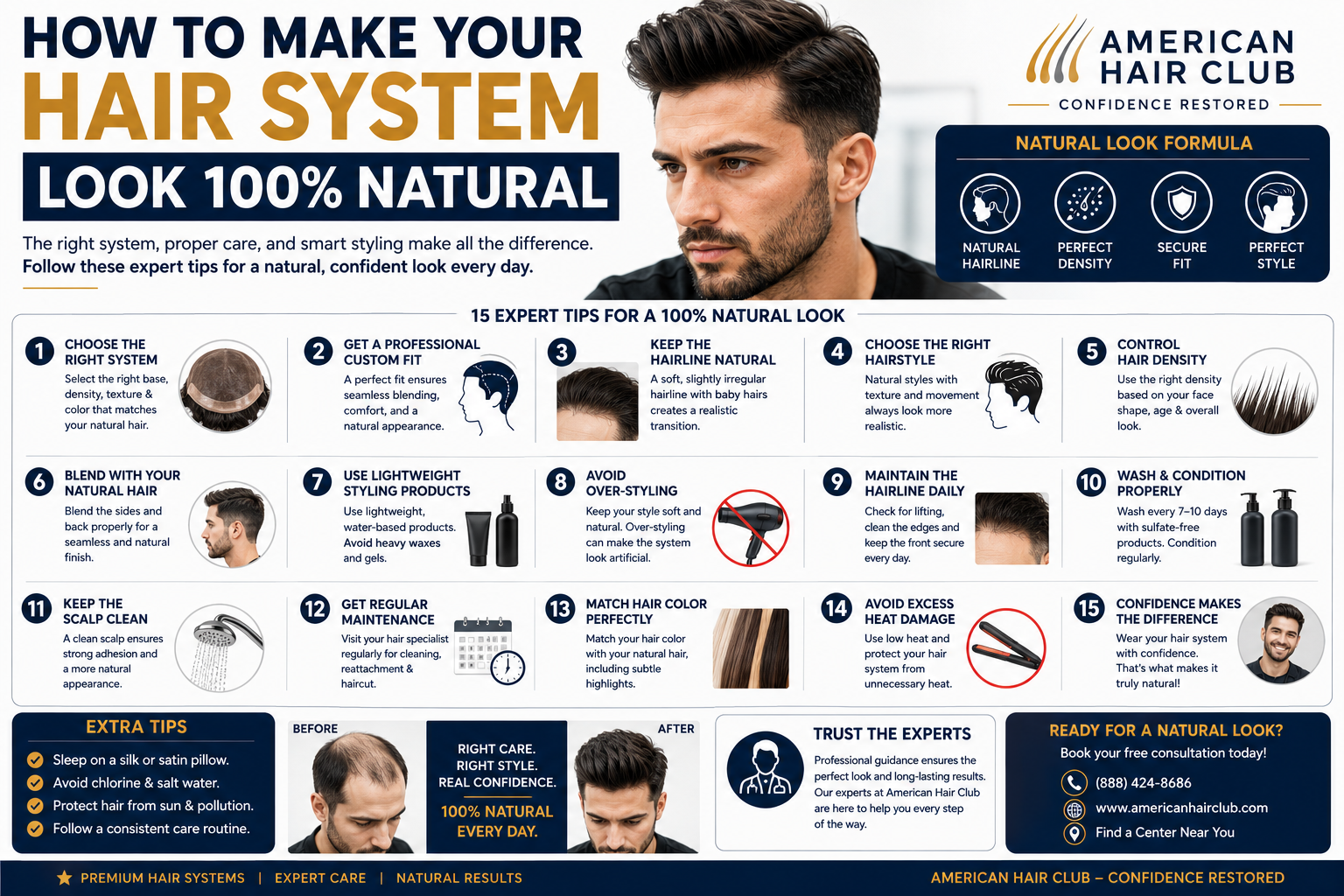
The real goal is to make it look natural, comfortable, and completely suited to you. A hair system that doesn’t match your hairline, density, color, texture, or hairstyle can look noticeable. On the other hand, a properly customized and maintained system can blend remarkably well with your existing hair.
So, how do you get a natural-looking hair system?
It starts with understanding the details that make a difference.
At American Hair Club, we help men explore personalized hair replacement options based on their hair loss pattern, lifestyle, appearance, and styling preferences. In this complete guide, we’ll explain how to choose, wear, style, and maintain a hair system for a natural-looking result.
What Makes a Hair System Look Natural?
A natural-looking hair system isn’t simply about using high-quality hair.
Several elements work together to create a realistic appearance:
- Natural-looking hairline
- Correct hair density
- Accurate color matching
- Matching hair texture
- Appropriate base material
- Proper fitting
- Seamless blending
- Suitable hairstyle
- Regular maintenance
If even one of these elements is significantly different from your natural appearance, the system may become more noticeable.
The goal is to create a hair system that looks like it belongs to you—not something that has simply been placed on your scalp.
1. Start With the Right Hair System
The first step is selecting a system that suits your specific hair loss pattern.
Men experience hair loss differently. Some have thinning around the crown, while others experience recession around the front or more extensive thinning across the top.
A hair system should be selected according to the area that needs coverage.
Important factors include:
Coverage Area
Determine whether you need:
- Crown coverage
- Front coverage
- Top-of-head coverage
- More extensive coverage for advanced thinning
Base Material
Different base materials provide different benefits in terms of appearance, durability, breathability, and attachment.
Hair Type
Your system should match your natural hair as closely as possible in terms of:
- Texture
- Wave pattern
- Thickness
- Color
- Density
Choosing the right combination from the beginning makes achieving a natural appearance much easier.
2. Choose the Right Hair Density
One of the biggest mistakes men make is choosing a hair system that is too dense.
It may seem logical that more hair will provide better coverage, but excessive density can make a system look unnatural.
Think about how natural hair changes with age. Hair density usually isn’t identical across the entire scalp.
A natural-looking system should generally have a gradual density pattern.
For example:
Front: Lower density
Middle: Moderate density
Crown: Natural transition
The correct density should also complement your existing side and back hair.
A professional specialist can help determine the appropriate density based on your age, facial features, existing hair, and desired hairstyle.
3. Get a Natural Hairline
The hairline is arguably the most important part of a hair system.
Why?
Because people naturally look at the face and forehead area during conversations.
A hairline that is too straight, too low, or too dense can immediately attract attention.
A natural hairline usually has:
- Slight irregularity
- Gradual density
- Fine hairs toward the front
- Appropriate recession
- A realistic transition into the scalp
Your hairline should also be appropriate for your age and facial structure.
A mature man may look more natural with a slightly receded hairline rather than an extremely low, youthful hairline.
4. Match Your Natural Hair Color
Color matching is another important part of creating a seamless appearance.
Don’t choose a hair system color simply because it looks right under indoor lighting.
Natural hair can appear different under:
- Sunlight
- Office lighting
- Bathroom lighting
- Camera flashes
Your specialist should compare the system color with your existing hair and overall appearance.
If you have grey hair, highlights, or multiple tones, a completely uniform color may look less natural.
Adding subtle variation can create a more realistic result.
5. Match the Hair Texture
Hair texture varies from person to person.
Your natural hair may be:
- Straight
- Slightly wavy
- Wavy
- Curly
- Fine
- Medium
- Coarse
A mismatch between your hair system and your natural hair can make blending difficult.
For example, if your side hair is naturally wavy but the system is completely straight, the difference may become noticeable after styling.
Matching the texture allows both sections to move together more naturally.
6. Get a Professional Hair System Fit
A properly fitted system should follow the shape of your scalp.
Professional fitting helps ensure:
- Correct positioning
- Secure attachment
- Comfortable wear
- Smooth edges
- Natural hair direction
- Proper coverage
The system shouldn’t look like it’s sitting on top of your head.
It should integrate with your overall hairstyle.
Professional fitting is especially important around the front hairline and sides, where poor positioning can become noticeable.
7. Blend the Hair System With Your Existing Hair
If you still have hair around the sides and back, blending is essential.
The transition should be gradual rather than creating an obvious difference between your natural hair and the hair system.
A professional stylist may use:
- Layering
- Tapering
- Texturing
- Blending
- Customized cutting
The haircut should make both areas appear as one hairstyle.
This is one of the biggest advantages of professional hair system styling.
8. Choose a Hairstyle That Suits You
Your hairstyle should match your:
- Face shape
- Age
- Lifestyle
- Hair system
- Hair density
- Personal preference
Popular natural-looking styles for men include:
Textured Crop
A textured crop provides movement while making blending easier.
Classic Side Part
A side part creates a professional and timeless appearance.
Soft Quiff
A modern quiff adds volume without requiring an overly dramatic style.
Medium Layers
Layers create movement and help disguise transitions.
Low Fade With Textured Top
A low fade can create a clean transition between the hair system and natural side hair.
The best hairstyle isn’t necessarily the trendiest one. It’s the one that looks believable and suits you.
9. Avoid Over-Styling
Natural hair isn’t perfectly arranged every minute of the day.
If your hair system is extremely stiff, shiny, or perfectly positioned, it can look less realistic.
Avoid excessive use of:
- Strong gels
- Heavy wax
- Greasy oils
- High-shine products
- Strong hairsprays
Instead, use lightweight styling products and allow some natural movement.
A little texture often makes a bigger difference than excessive styling.
10. Use Hair System-Friendly Products
Not every hair product is suitable for a hair system.
Harsh shampoos and styling products can dry out hair fibers, cause buildup, and affect the system’s appearance.
Look for products that are:
- Gentle
- Moisturizing
- Sulfate-free
- Suitable for treated hair
- Recommended for hair systems
Your specialist can recommend products based on your specific system and maintenance routine.
11. Wash Your Hair System Correctly
Washing incorrectly can shorten the lifespan of a hair system.
When washing:
- Use lukewarm water.
- Apply a gentle shampoo.
- Smooth the product through the hair.
- Avoid aggressive rubbing.
- Rinse thoroughly.
- Apply conditioner mainly to the lengths and ends.
- Pat dry gently.
Avoid twisting or scrubbing the hair.
You don’t need to wash your hair system aggressively to keep it clean.
Gentle care is usually better.
12. Protect Your Hair System From Heat
Excessive heat can damage hair fibers.
Frequent use of:
- Straighteners
- Curling irons
- High-temperature blow dryers
can affect softness and texture.
If you use a hair dryer, choose a low or cool setting whenever possible.
Allowing the system to air dry is often preferable.
If heat styling is necessary, use appropriate heat protection and follow your stylist’s recommendations.
13. Take Care of the Hairline and Attachment
A natural-looking hair system needs a secure attachment.
Check the hairline regularly for:
- Lifting
- Adhesive buildup
- Dirt
- Uneven edges
- Loose sections
Don’t ignore small lifting.
Minor issues can become bigger problems if left untreated.
If the attachment is no longer secure, professional maintenance is recommended.
14. Follow a Regular Maintenance Schedule
Your hair system needs ongoing care.
A simple routine can include:
Daily
- Gentle brushing
- Light styling
- Hairline inspection
- Protection from excessive heat
Weekly
- Proper washing
- Conditioning
- Product buildup removal
Monthly
- Professional inspection
- Haircut and blending
- Attachment maintenance
- Hairline adjustments when necessary
Your exact schedule may vary depending on your lifestyle and the type of system you wear.
15. Consider Your Lifestyle
Your lifestyle should influence your hair system choice.
If you’re highly active, you may need a system and attachment method suited to regular exercise.
If you spend significant time outdoors, protection from sunlight becomes more important.
If you swim frequently, you’ll need to consider exposure to chlorine or salt water.
If you work in a professional environment, you may prefer a classic, low-maintenance hairstyle.
Tell your specialist how you spend your day.
The best hair system isn’t just one that looks good in the salon. It should work comfortably with your real life.
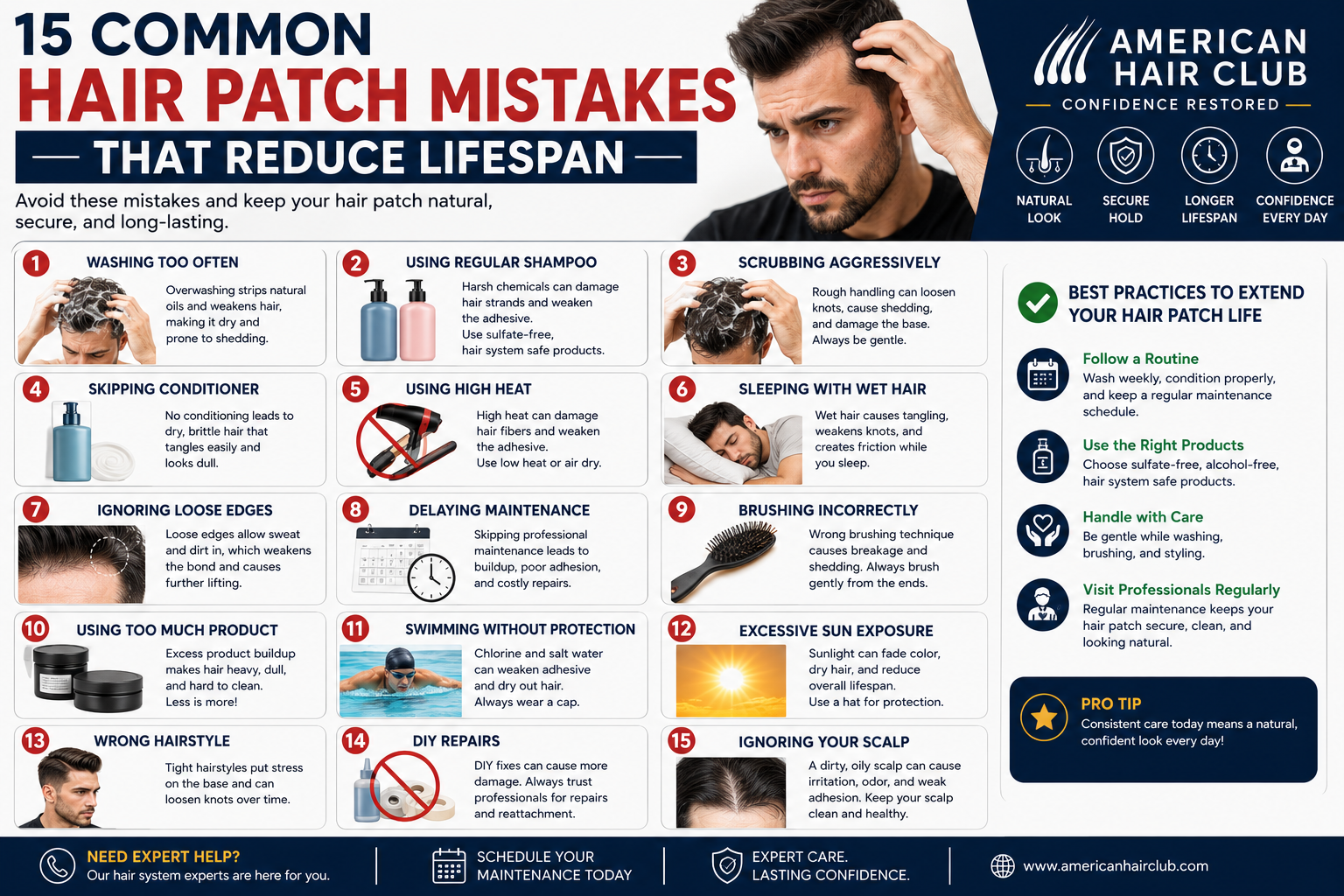
Common Mistakes That Make Hair Systems Look Unnatural
Even an excellent system can look less realistic because of poor choices.
Choosing Too Much Hair
Excessive density can create an artificial appearance.
Creating an Extremely Low Hairline
A very low hairline may look unnatural, particularly for mature men.
Poor Color Matching
A noticeable difference between your system and natural hair can affect the entire look.
Ignoring the Sides
Poor blending around the temples and sides can reveal the transition.
Using Too Much Product
Heavy styling products can create unnatural shine and stiffness.
Skipping Maintenance
Loose edges, tangled hair, and damaged fibers can quickly affect appearance.
Choosing a Hairstyle That Doesn’t Suit You
A hairstyle should work with your face, lifestyle, and system—not simply follow a trend.
How to Make Your Hair System Look Natural in Photos
Many men worry about how their hair system will appear in photographs.
Good lighting can make a difference.
Before taking photos:
- Avoid excessive shine from styling products.
- Use natural-looking styling.
- Make sure the hairline is secure.
- Avoid extremely flat or stiff hair.
- Keep the hairstyle relaxed.
Modern hair systems can look very natural in photos when properly customized and styled.
How Often Should You Replace a Hair System?
There isn’t one universal replacement schedule.
The lifespan depends on:
- Base construction
- Hair quality
- Frequency of use
- Maintenance
- Lifestyle
- Exposure to heat and chemicals
- Attachment method
Instead of replacing a system based solely on time, look for signs of deterioration.
These may include:
- Significant shedding
- Damaged base
- Persistent tangling
- Changes in texture
- Loss of density
- Difficulty maintaining the attachment
A professional can help determine whether your system needs repair, maintenance, or replacement.
Why Professional Hair System Services Matter
Trying to manage everything yourself can be challenging, especially when you’re new to hair systems.
Professional specialists can help with:
- Hair system selection
- Hairline design
- Density selection
- Color matching
- Custom fitting
- Haircutting
- Styling
- Cleaning
- Reattachment
- Ongoing maintenance
The right professional support can make wearing a hair system much easier.
Why Choose American Hair Club?
At American Hair Club, we understand that every man’s hair loss journey is different.
Our goal is to provide personalized hair replacement solutions that look natural, feel comfortable, and fit into your lifestyle.
Our services can include:
- Customized hair systems
- Non-surgical hair replacement
- Professional fitting
- Natural hairline design
- Hair density customization
- Haircut and styling
- Hair system maintenance
- Reattachment services
- Personalized aftercare guidance
We focus on the details that make the difference between simply adding hair and creating a natural-looking hairstyle.
Final Thoughts
Getting a natural-looking hair system is about much more than choosing a high-quality product. The final result depends on several details working together.
The right hairline, density, color, texture, base, fit, haircut, and maintenance routine can make your hair system blend naturally with your overall appearance.
Start by choosing a system that suits your hair loss and lifestyle. Work with a professional to customize the hairline and density. Match the color and texture carefully, then choose a hairstyle that complements your face.
Once your system is fitted, maintain it properly. Wash gently, avoid excessive heat, use suitable products, and schedule professional maintenance regularly.
Most importantly, choose a look that feels like you.
A natural-looking hair system shouldn’t make you feel like you’re wearing something different. It should simply become part of your everyday appearance—comfortable, stylish, and confidence-boosting.
If you’re considering a hair system or want to improve the natural appearance of your current system, American Hair Club can help you explore customized options and professional care designed around your needs.