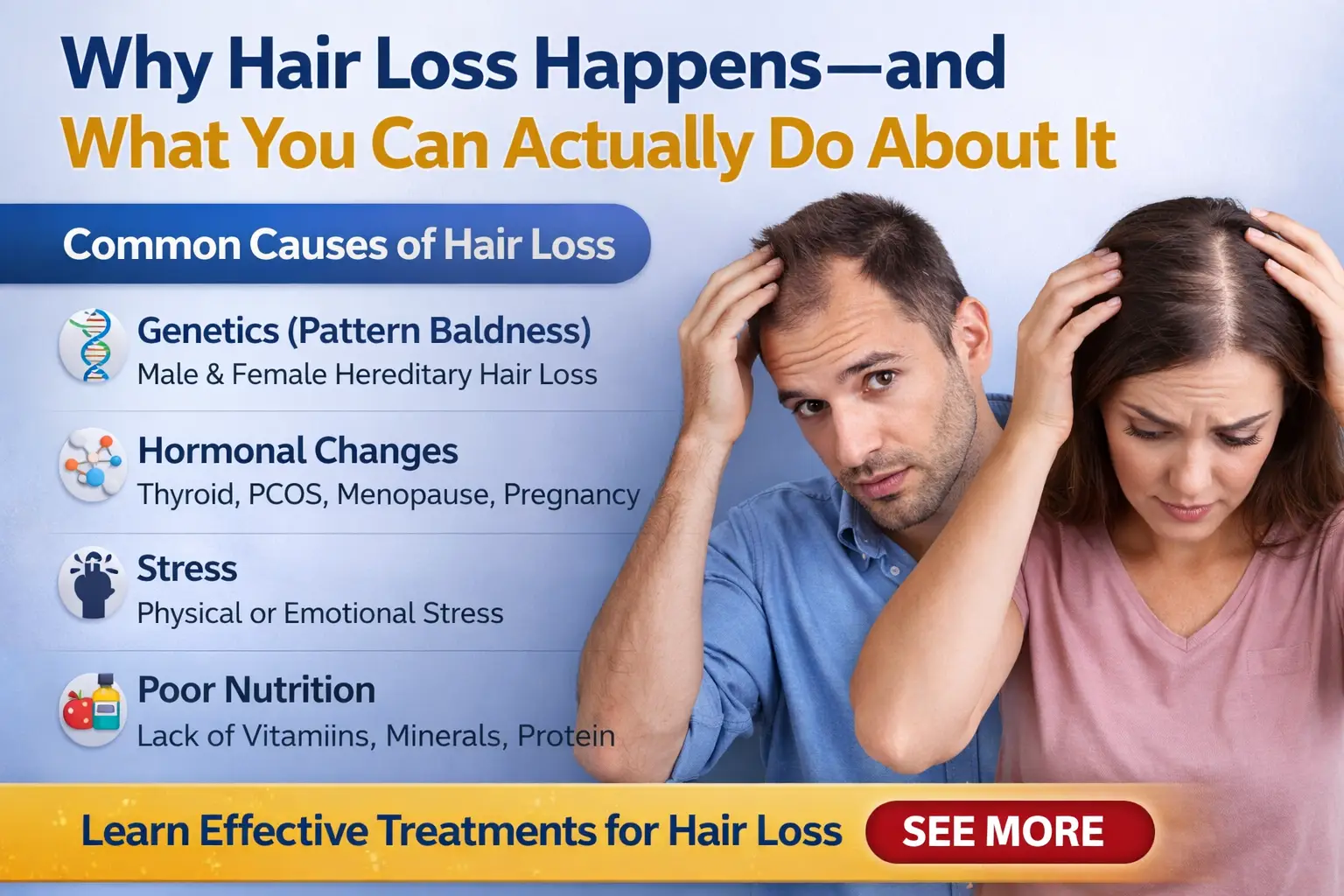
Why Hair Loss Happens—and What You Can Actually Do About It
Hair loss is a common concern affecting both men and women across all age groups. If you’ve noticed excessive hair fall, thinning, or bald patches, you’re not alone. Understanding why hair loss happens is the first step toward finding the right solution. Fortunately, with proper diagnosis and timely care, hair loss can often be controlled or even reversed.

Why Hair Loss Happens
Hair loss does not have a single cause. Instead, it usually results from a combination of internal and external factors.
1. Genetics (Androgenetic Alopecia)
The most common reason hair loss happens is genetics. Male and female pattern baldness is hereditary and usually progresses gradually. In men, it often begins with a receding hairline, while women notice overall thinning.
2. Hormonal Imbalance
Hormonal changes can significantly impact hair growth. Conditions such as thyroid disorders, PCOS, pregnancy, menopause, and postpartum changes often trigger hair loss in women.
3. Stress and Lifestyle Factors
Physical or emotional stress can push hair follicles into a resting phase, leading to sudden hair fall. Poor sleep, lack of exercise, smoking, and irregular eating habits can worsen the condition.
4. Nutritional Deficiencies
Hair needs proper nutrition to grow. Deficiencies in iron, protein, biotin, vitamin D, and zinc are common reasons hair loss happens, especially in individuals with poor dietary habits.
5. Medical Conditions
Autoimmune disorders, scalp infections, anemia, and chronic illnesses can interfere with normal hair growth. In such cases, hair loss is often a symptom of an underlying issue.
6. Excessive Styling & Chemical Treatments
Frequent use of heat tools, chemical straightening, coloring, and tight hairstyles can damage hair shafts and follicles, leading to breakage and traction alopecia.
Early Signs of Hair Loss You Shouldn’t Ignore
Increased hair fall while combing or washing
Thinning at the crown or widening part line
Receding hairline
Weak, brittle hair
Visible scalp
Recognizing these early signs helps in starting treatment before permanent damage occurs.
What You Can Actually Do About Hair Loss
The good news is that hair loss is manageable when addressed early and correctly.
1. Get a Proper Diagnosis
Before starting any treatment, it’s essential to understand why hair loss happens in your case. A dermatologist or hair specialist can identify the root cause through scalp examination and blood tests.
2. Improve Nutrition
A balanced diet rich in proteins, iron, vitamins, and minerals supports hair regrowth. Including eggs, leafy greens, nuts, fruits, and whole grains can significantly reduce hair fall.
3. Medical Treatments
Clinically proven treatments like topical solutions, oral medications, and advanced therapies can slow down hair loss and stimulate regrowth when prescribed by a specialist.
4. Advanced Hair Treatments
Modern solutions such as PRP therapy, growth factor treatments, and hair restoration procedures provide effective results for eligible candidates.
5. Adopt Healthy Hair Care Habits
Avoid excessive heat styling
Use mild, sulfate-free shampoos
Do not tie hair too tightly
Massage the scalp to improve blood circulation
6. Manage Stress
Since stress is a major trigger, relaxation techniques like yoga, meditation, and regular exercise can help reduce hair fall naturally.
Can Hair Loss Be Prevented?
While genetic hair loss cannot be completely prevented, its progression can be slowed. Early intervention, proper treatment, and lifestyle changes play a crucial role in maintaining healthy hair.
When Should You See a Hair Specialist?
You should consult a specialist if:
Hair loss is sudden or severe
You notice bald patches
Hair fall continues for more than 3 months
Home remedies show no improvement
Early medical guidance can save existing hair and improve outcomes.
Conclusion
Understanding why hair loss happens empowers you to take the right steps toward treatment. Whether caused by genetics, stress, hormonal imbalance, or nutrition, hair loss is no longer something you have to accept silently. With modern medical advances and expert care, effective solutions are available to restore both hair and confidence.